Hi, I’m Christophe

I have a life long passion for computer programming. My journey began at around age 8 when I started experimenting with the Basic programming language. By the time I was 10, I had written my first program in C++ when I was about 10 years old. I didn’t fully understand what I was doing, but the result was a program that could ask simple math questions and evaluate your response.
In high school I started studying Latin. This did not particularly excite me, and I spent a lot of evenings developing the TestMaker program, designing my first GUI in Visual Basic. The concept was simple: you’d input a list of words and their translations, and the program would quiz you by presenting a word and checking if your translation was correct..
I initially created the TestMaker program to help me study my own Latin vocabulary, but my real excitement came from building the program itself. Unsurprisingly, my grades didn’t improve much, but my programming skills certainly did.
Fast forward to today
Currently I am employed at the KU Leuven where I hold both a teaching position for an introductory Python Programming course. Every year I look forward tremendously to introduce yet another generation of students to the Python programming language. Interacting with students is also a very rewarding experience as it requires that I keep looking at my own skills from a beginners mindset.
In addition to my teaching position, I also hold a technical support position at the laboratory of Experimental Psychology. My main task is to support researchers as they program and develop their own experimental tasks using tools such as PsychoPy and jsPsych.
In my spare time I have started to take a strong interest in everything web development related. This website is an obvious consequence of that. I also work as a volunteer for several charity websites and assist them with designing and choosing an appropriate website hosting solution.
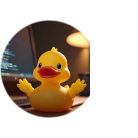
And the rubber duck…
In case you are wondering, the rubber duck from the homepage is a reference to a problem solving technique called rubber duck debugging. The principle is that when you are stuck on something, the mere act of talking about it can already lead to a sudden insight about a possible solution.
To take it even further, you do not even need to talk to a real person. Just a rubber duck sitting on top of your monitor is sufficient.